

Good oral hygiene isn’t just about fresh breath; it’s crucial for your pet’s overall well-being. Let’s explore the importance of pet dental care, signs of dental disease, what happens during a pet dental cleaning, why anesthesia is necessary, and how to maintain your pet’s dental health at home.
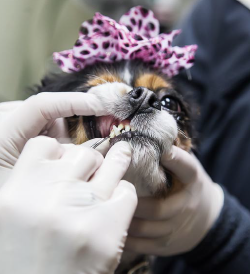
Pet dental care is a critical aspect of their overall health. Just like humans, pets can suffer from dental diseases which, if left untreated, can lead to severe health issues including heart, liver, and kidney diseases. Dental problems can cause significant pain, making it difficult for your pet to eat and may lead to nutritional deficiencies or weight loss. Regular dental care, both professional and at home, helps prevent these issues and contributes to a longer, healthier life for your pet.
Dental disease in pets is more common than you might think, with most dogs and cats showing signs by the age of three. Symptoms include:
If you notice any of these signs, it’s time to schedule a dental checkup.
At Prairie Lane Veterinary Hospital, we typically recommend yearly or bi-yearly dental exams and cleanings. A pet dental consists of a thorough cleaning that goes beyond what can be achieved at home. The process includes:
During the cleaning, our Omaha, NE, veterinarians will also assess the health of your pet’s gums, teeth, and mouth, and may take dental X-rays to check for any hidden problems.
A pet dental X-ray is an imaging tool used by our veterinarians to take pictures of your pet’s teeth, gums, jaw, and bones in the surrounding area. This procedure is like X-rays in human dentistry and is vital in assessing dental health and detecting any underlying issues.
When is a Pet Dental X-ray Necessary?
Pet dental X-rays are often recommended when there is a suspicion of dental disease, injury, or when planning for dental procedures such as extractions. Symptoms that may prompt an X-ray include bad breath, difficulty eating, swollen gums, loose teeth, or visible signs of pain.
The Importance of Dental X-Rays in Animal Dentistry
Dental X-rays provide a non-invasive way to examine the internal structure of the teeth and jaw, allowing our veterinarians to detect problems such as:
By catching these issues early, our vets can provide proper treatment to prevent further pain and complications for your pet.
Anesthesia is crucial for a thorough dental cleaning because it allows our Omaha, NE, veterinarians to fully inspect each tooth and clean below the gumline where most dental disease occurs. It also keeps your pet still and pain-free during the procedure. Many pet owners are concerned about the risks of anesthesia, but with modern veterinary medicine, the risks are minimal, especially when compared to the risks of leaving dental disease untreated.
Regular home dental care can significantly reduce the frequency and extent of professional cleanings needed and can help prevent dental disease. Here are some tips on maintaining your pet’s oral health:
Finding a cat or dog dentist near you in Omaha is easy with our online direct booking feature. Both new and existing clients seeking care from a pet dentist may schedule an appointment at our Omaha vet clinic.
Located off of I-680 via W Center Rd. Directly between Cryer Ave and Arbor St on S 120th St.
Phone: 402-333-3847
